
Islam is why Columbus sailed West to go East!
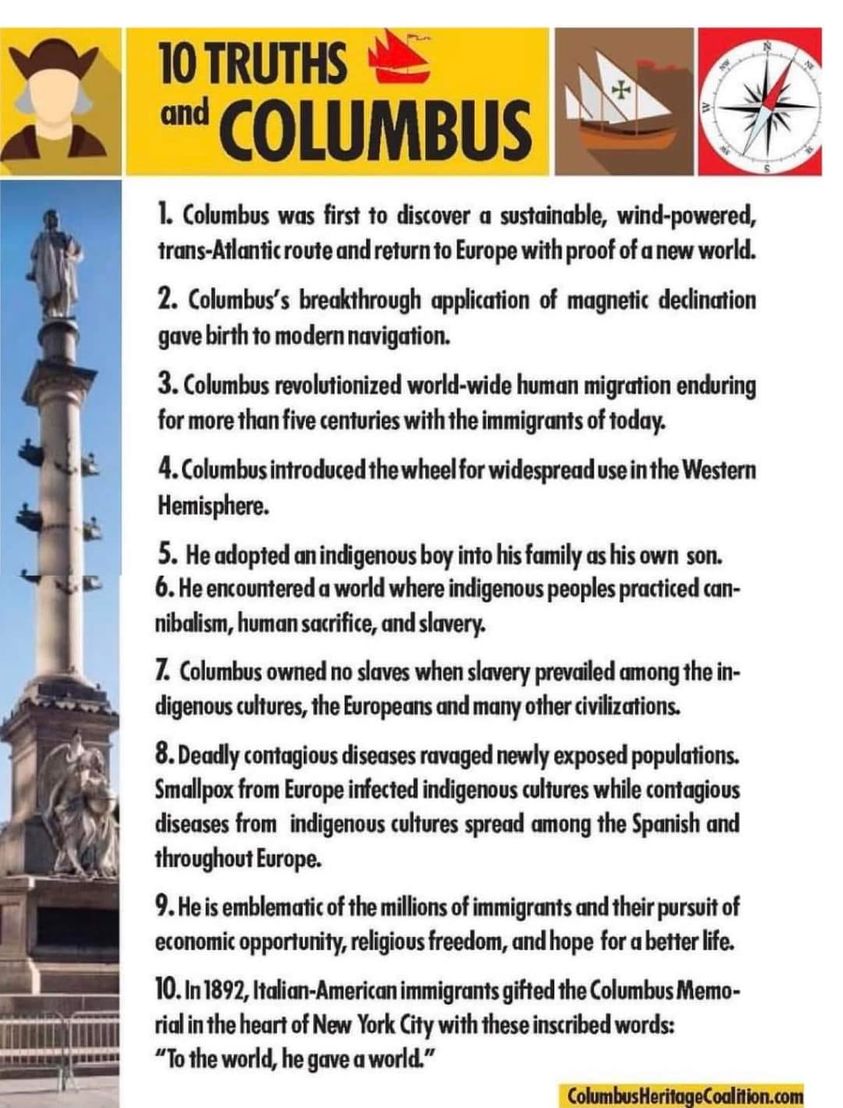
Columbus initiated the great European exploration and discovery of previously unknown lands for the people of Europe. All the earlier European incursions to the New World were all dead ends; they ended shortly after and were forgotten. Evidence was later found, proving the earlier incursions, which means very little.
After the Fall of Rome, the Eastern and Western Churches were out of touch with one another due to the barbarians and later Moslems separating them. Travel was extremely dangerous between the two. Europe’s supply of papyrus from Egypt was unavailable due to the Muslims controlling the entire North African coast, and Europe had to make do with the much more expensive Velum (Animal skin, usually sheep). The lack of written communication was another contributing factor to the Dark Ages.
Dating back to the Roman Empire in 130 B.C., trade was conducted between Europe and Asia via a trade route known as the Silk Road. However, the Ottoman Turks closed off the Silk Road after capturing the city of Constantinople in 1453. This event was a key factor in sparking the Age of Exploration, as Europeans sought new trade routes to Asia.
Because of the fall of Constantinople to the Muslims on May 29, 1453, by the Muslim Ottoman Sultan Mehmet II, thus closing the trade routes to the East. This was devastating for European tradesmen, who had until then since time immemorial had taken the land route through Constantinople and Anatolia to travel to India and trade for silk, spices, and other goods. But when the Muslims conquered Constantinople, these tradesmen would have been taking their lives into their own hands if they traveled by these ancient routes. As non-Muslims in Muslim-controlled countries, they would have been subject to being taken hostage for ransom, enslaved, made into eunuchs or harem slaves, forcibly ‘converted’ to Islam, or killed outright.
About forty years after Moslems cut off the overland trade routes, Columbus wanted to establish a trade route to China and thought that he could go West to go East. Why did Columbus want to go West to go East? To avoid being robbed, killed, or enslaved by Muslims! Whether using overland routes or going by sea, to anyone going Eastward, all the known routes were blocked by Muslims.
Muslims controlled the overland trade routes, and there were Muslim pirates off the coast of what we now call Somalia, Yemen, Oman, Iran, and Pakistan in the Arabian Sea, operating just like the modern-day Somali pirates.
Any travel through Muslim-controlled territory was a good way to end up dead or enslaved!
The Romans used a distance measurement called a “Stadia,” which was measured as the length of a complete stride from the right foot to the right foot again. (Two Steps)
The Roman Army would march back and forth between towns to settle on a corrected average number of Stadia that one town was from the next.
Most educated people, long before Christopher Columbus’s time, knew that the Earth was round, and Columbus was one of them; he was familiar with Eratosthenes’s calculation of the Earth's circumference. https://en.wikipedia.org/wiki/Eratosthenes
But because the Stadia was an ancient and obsolete system of measurement, he assumed incorrectly that a Stadia was just one step. Using the distance measurement that was in use at his time, he incorrectly recalculated the circumference of the earth as half as big. That is why when he thought he had reached the outer reaches of the Asian Continent, he had gone less than halfway!
Columbus went to his grave believing not that he’d discovered new continents, but that he’d merely reached some outer islands of eastern Asia.
When Columbus landed in 1492, he believed he had reached the eastern coast of Asia, specifically the islands of the East Indies. Columbus had embarked on his journey to find a westward route to Asia, so when he arrived in what is now the Bahamas, he mistakenly thought he had reached the outskirts of Asia. This is the reason why the Caribbean Islands are sometimes referred to as the West Indies is because of that misunderstanding.
10 Things People Get Wrong About Columbus
https://tfpstudentaction.org/blog/christopher-columbus-myth-vs-fact
The Catholic Spirit of Christopher Columbus
Five Myths About Christoper Columbus
https://americaneedsfatima.org/articles/the-catholic-spirit-of-christopher-columbus
Fact #1: Christopher Columbus brought the Faith and civilization to America. In fact, Pope Leo XIII issued a glowing encyclical, Quarto Abeunte Saeculo, to celebrate Columbus’s providential mission.
Fact #2: Columbus was “extremely zealous for the honor and glory of God”, wrote Bartolome de las Casas. “He deeply yearned for the evangelization of these peoples and for the planting and flourishing everywhere of people’s faith in Jesus Christ”.
Fact #3: Leftist professors hide this fact: Slavery was widespread among the Natives in the Caribbean; this was a long-established fact... long before Columbus arrived.
NO, it was NOT Columbus or his men that enslaved the natives to work for them... THAT happened LATER, after Columbus’ voyages... no matter what your Leftist Professor said!
Fact #4: The first tribe Columbus and his men encountered was the Taíno-Arawak tribe. The first encounter between Europe and the Americas went well. The Taíno were friendly, curious, and helpful. Columbus was emphatic that his crew treated them with kindness and respect.
Lest you think that Columbus stumbled on the Garden of Eden, the islands were also inhabited by the Caribs, a tribe of cannibals for whom, according to Pulitzer Prize-winning historian Samuel Eliot Morison, babies were a delicacy—or, in Morison’s words, “a... toothsome morsel.”
Like every other place on Earth, at every point in history, the local people were a mixed bag. Some were good, some not so good, and some were terrible.
Fact #5: Columbus insisted on the fair treatment of the native people. He wrote: “I recognized that they were people who would be better freed [from error] and converted to our Holy Faith by love than by force”.
Regarding the Paintings and Statues of ‘Columbus’
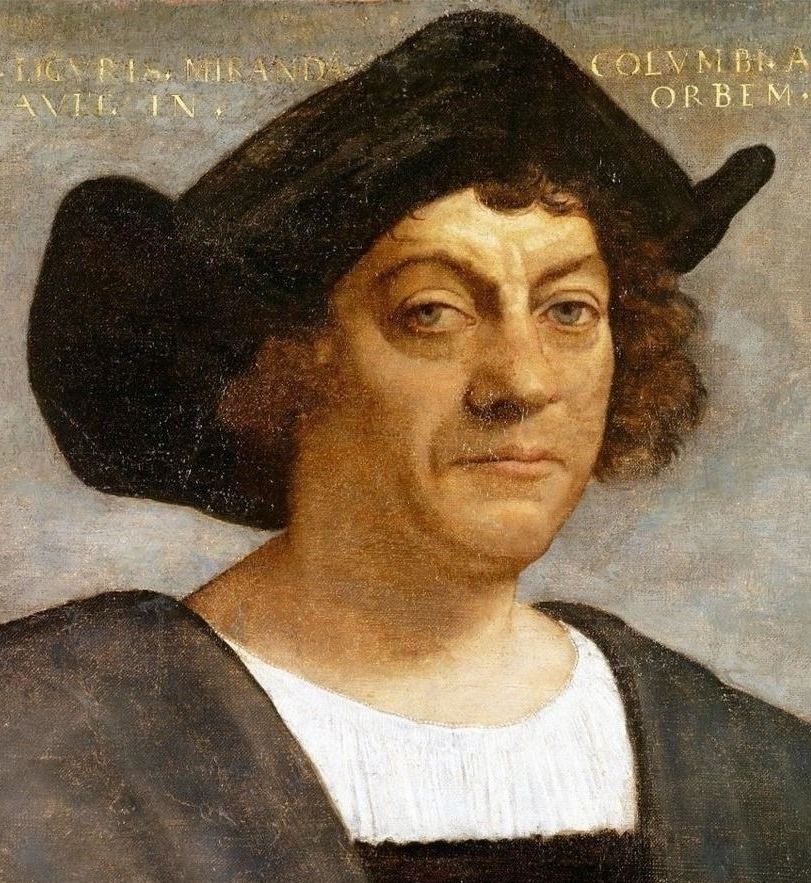
BTW: Do a web search for pictures of “Columbus”, they show vastly different paintings of vastly different-looking men, THEY ARE ALL WRONG, that is not what he truly looked like. There is not one painting of Columbus that was ever done by anyone who actually saw him or was painted while he was still ALIVE.
Even the very earliest paintings of “Columbus” were all done by people who had never even met him and had no idea what he looked like!
Goodbye, Columbus Day
Even though it is still a national holiday, many cities no longer celebrate Columbus Day. They celebrate ‘Indigenous Peoples Day’ instead. What’s behind the switch? Contrary to what you might think, it’s not about paying homage to America’s original inhabitants.
Steven Crowder, host of Louder with Crowder, explains.
https://www.youtube.com/watch?v=HxYVbC283uM&w=840&h=473